When I’m choosing an action station, I’m thinking about two moments: the first plate served and the last piece of equipment put away. Between those moments, the station needs to support the menu, give the team a practical workspace, and look right in front of guests. Afterward, it needs to fit somewhere behind the scenes.
That is what makes the TRIO Folding Mobile Action Station from Forbes Industries worth a closer look. My interest goes beyond what it can do during service. I’m looking at how it fits the entire operation.
Let the Menu Shape the Station
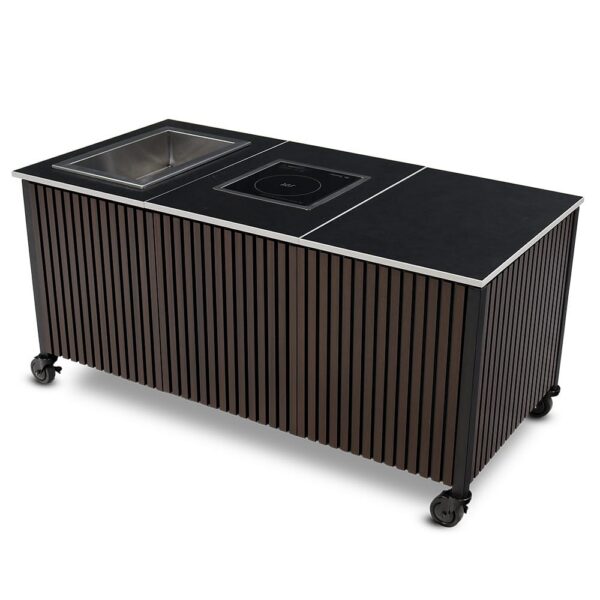
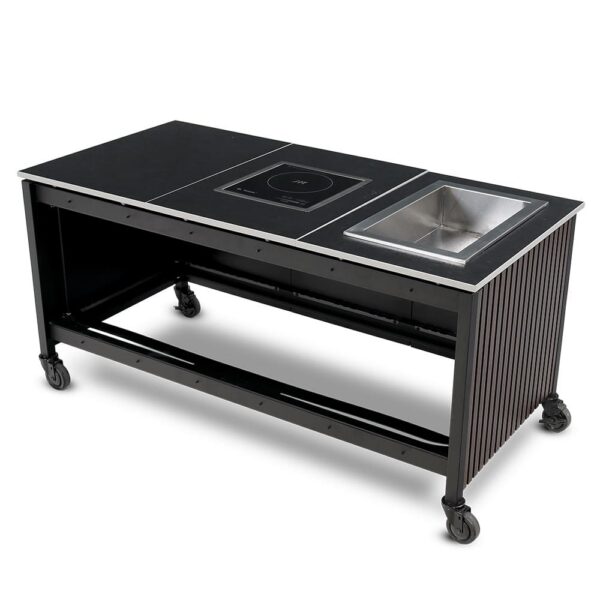
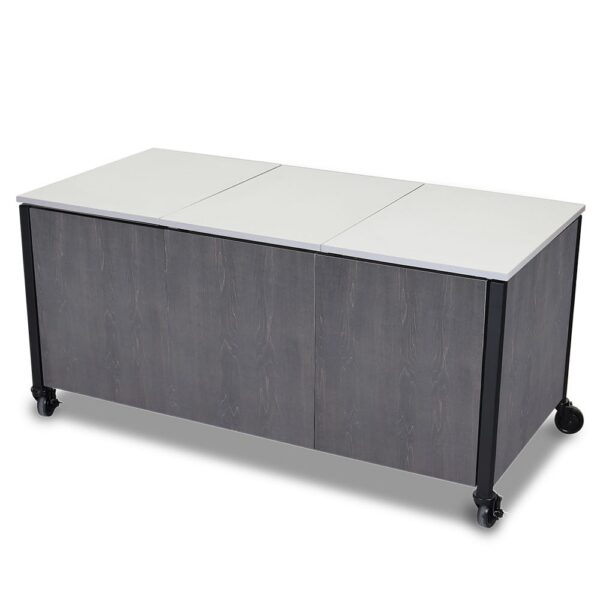
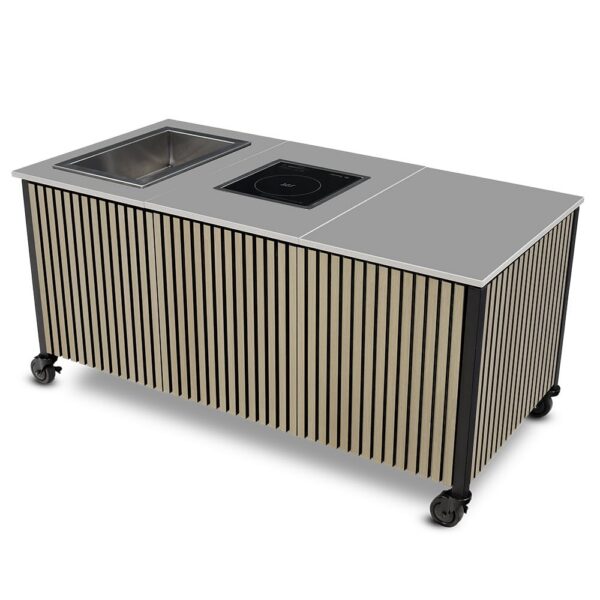
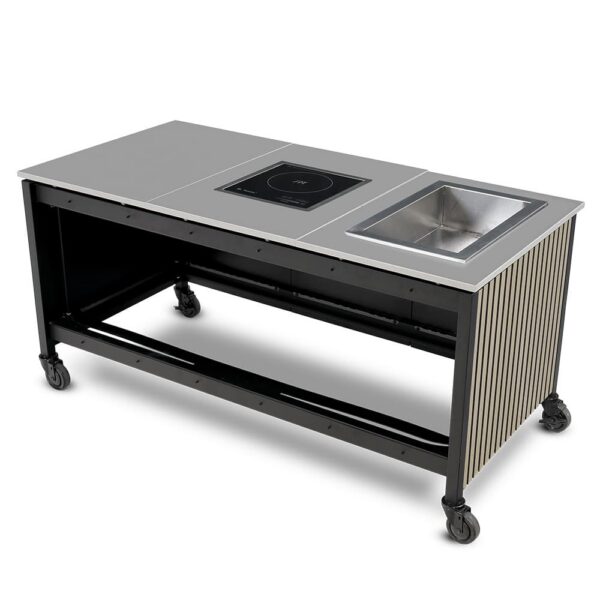
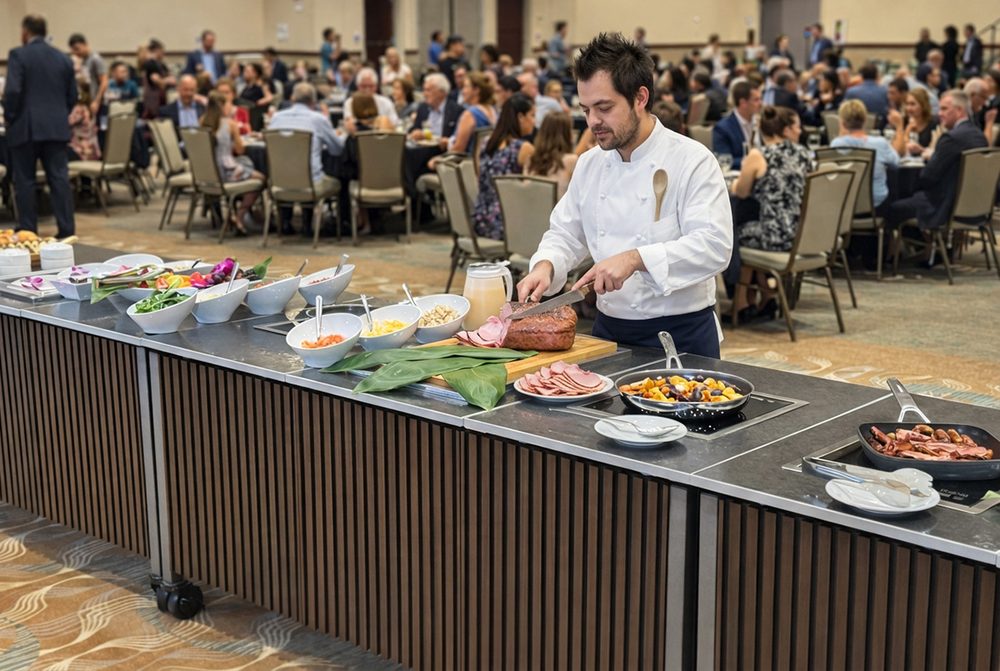
My starting point is always the food. An omelet service, a carving presentation, and a chilled display call for different working surfaces. TRIO’s interchangeable tiles include blank surfaces and optional cooking induction, warming induction, cutting boards, and insulated ice wells. I would configure an omelet station around cooking induction, ingredient organization, and plating space, then select a different combination for another event. The station can adapt with the menu.
One detail particularly appeals to me: the cooking-induction tile positions the cooking surface closer to the chef’s side, while the warming-induction surface is centered. That is the kind of distinction I look for when planning how a station will actually be used.
Think Beyond the Event Floor
For me, storage belongs in the equipment conversation from the beginning.
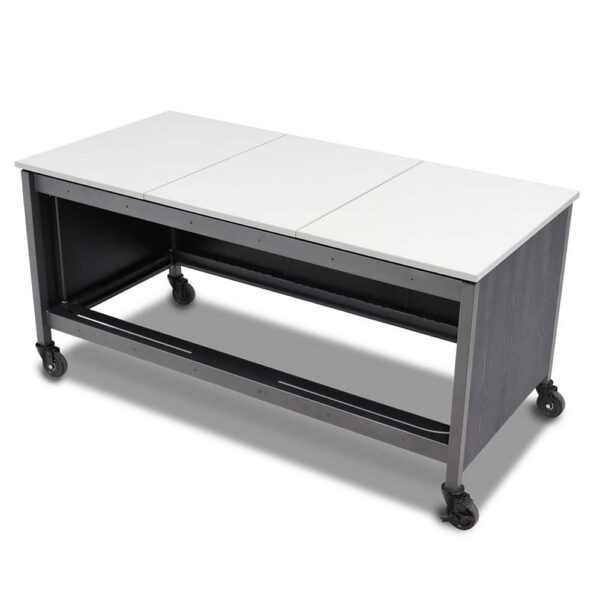
TRIO’s three station frames fold from 30 inches wide to under 9 inches, and the frames, panels, and appliance tiles store together on one transport cart. Forbes specifies that the system stores in less than one-third the space used by traditional action stations.
That would weigh heavily in my decision for a property balancing multiple event spaces with limited back-of-house storage. I want the freedom to build an inviting culinary presentation without planning permanent storage around three fully assembled stations. Keeping the components together also fits my approach to preparation: everything should have a place before the next event begins.
Consider the Setup Trade-Off
A station that stays fully assembled and a folding system serve different priorities. TRIO requires unfolding the frames, securing the supports, and installing the panels and appliance tiles. Its setup process also allows different arrangements, including straight buffet lines and corner configurations with optional accessory tables.
I would weigh that assembly process against the benefit of compact storage and flexible layouts. For a changing banquet schedule, that is a trade-off I would seriously consider. My event plan would still account for electrical access, ingredient placement, and final equipment checks. A well-organized station starts with a well-organized setup.
Give the Food a Worthy Setting
I want the equipment to feel as considered as the menu. TRIO offers HPL, wood veneer, slatted HPL, and slatted veneer panels, along with a selection of frame finishes. Those choices let me consider the station as part of the room’s presentation—not simply a surface for preparing food.
For a formal reception, I would look for finishes that complement the surrounding furnishings. For a contemporary event space, I might choose a different combination. Folding describes how the station stores. It does not have to define its appearance during service.
My Choice Depends on the Operation
TRIO is not the only route to menu flexibility. Other Forbes action stations offer built-in appliances and swappable appliance tiles, and I would consider those options for a service concept centered on particular equipment requirements. But when the brief calls for changing menus, adaptable event layouts, and compact storage between functions, TRIO would be my choice. Its combination of modular surfaces, folding frames, and coordinated transport addresses the priorities I would bring to that decision. Because choosing an action station is about more than where I cook. It is about how the whole service comes together.
Explore the TRIO Folding Mobile Action Station and configure a system around your menu, your space, and your service.