How a shared vision for tableside hospitality became purpose-built cocktail carts
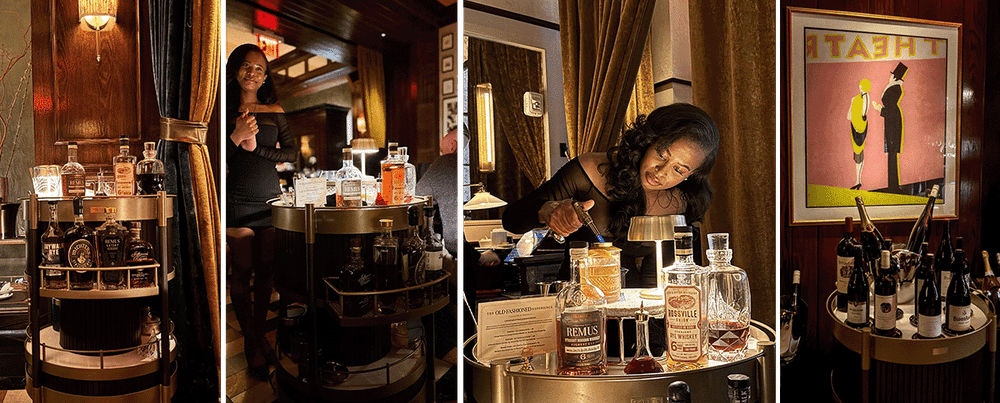
Some of the most memorable hospitality experiences happen when the experience comes directly to the guest. That philosophy is at the heart of the beverage program at Carversteak, where tableside cocktail service turns the preparation of a drink into part of the evening itself.
With the opening of Carversteak in Midtown Manhattan, the team wanted equipment that could support that experience—not simply transport bottles and glassware. Forbes Industries had the opportunity to work closely with the Carver Road Hospitality team to develop custom cocktail carts designed specifically around the way their team wanted to serve guests.
The result demonstrates what can happen when equipment design begins with the experience rather than the product.
Starting With the Service
Francesco Lafranconi of Carver Road Hospitality described Carversteak’s approach to beverage service as “theatrical service.” The cocktail isn’t simply prepared and delivered. The preparation itself becomes part of the experience.
From an equipment design perspective, that distinction matters. Our process needed to consider not only what needed to fit on the cart, but how the Carversteak team would move around it and use each component throughout service.
Translating a Cocktail Program Into a Cart
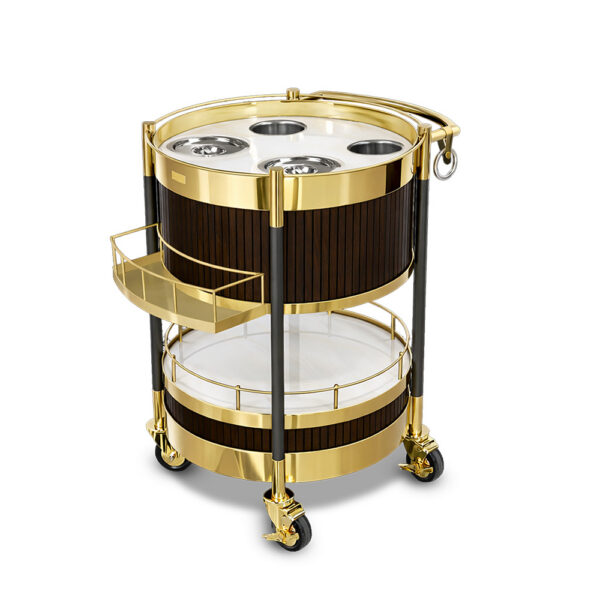
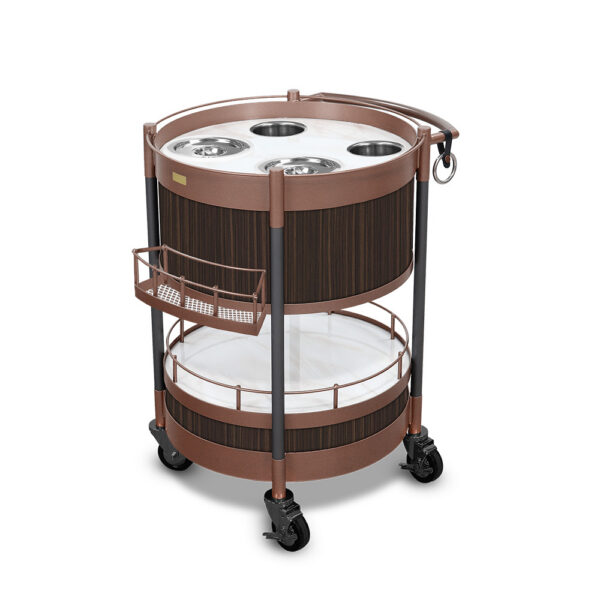
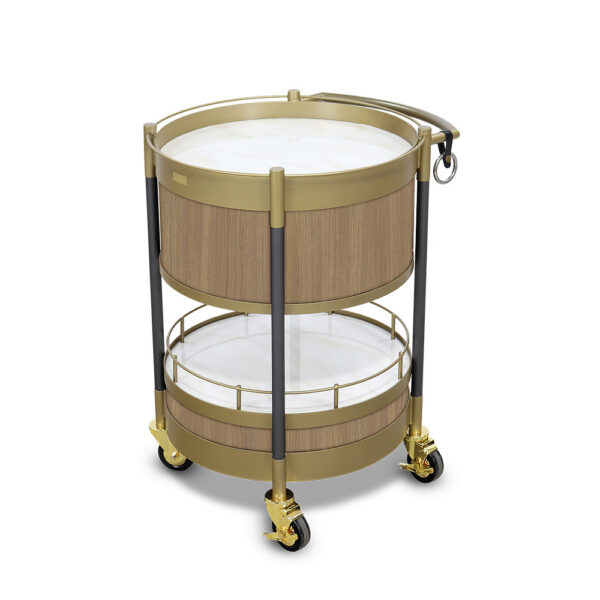
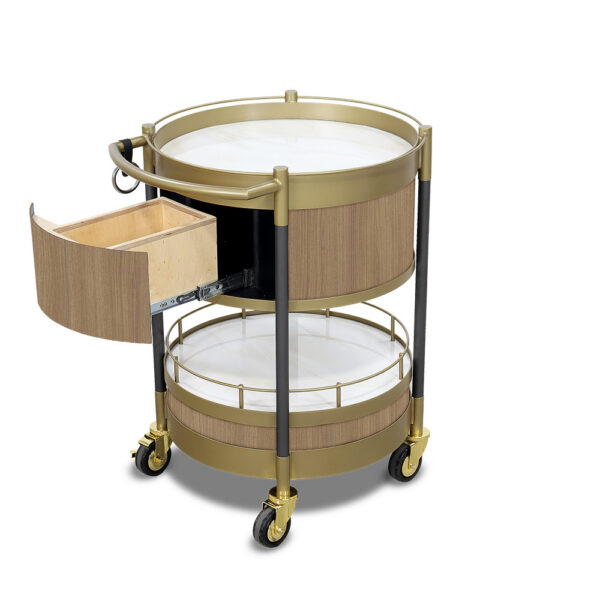
We started with Forbes’ Circa Bar Cart and heavily customized it around Carversteak’s operational requirements. We considered everything from working height and bottle placement to glassware, mixing tools, ice access, power, storage, and the sequence in which those elements would be used.
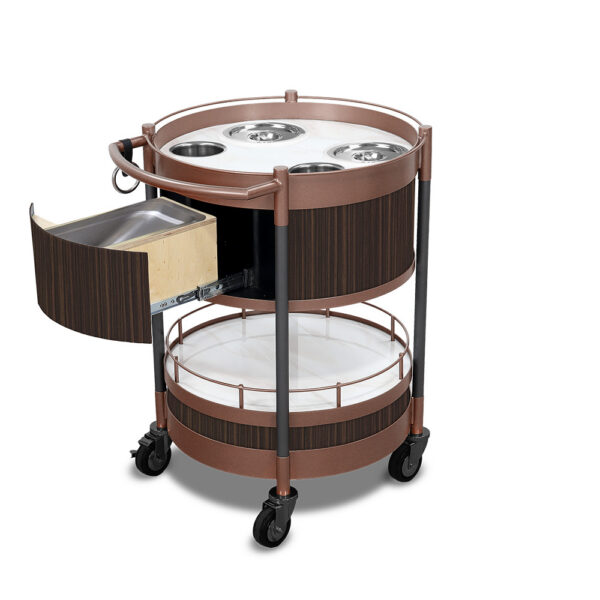
The result was a dedicated mobile mixology workstation. Its 24-inch working surface incorporates recessed pockets for mixing glasses, dedicated storage for shaker tins and mixology tools, a stainless-steel drip tray, recessed storage for bottles and jars, and a speed rail positioned for quick access during service.
Even details that might seem minor on paper were considered in relation to actual service. The push handle, for example, was positioned so the ice pan could be removed and exchanged while the cart remained in operation. Power was another consideration. A concealed battery compartment, inverter, and charger were incorporated into the cart, along with a pop-up power connection designed to support small appliances used as part of the presentation.
Rather than asking the beverage team to adapt its service to the equipment, the goal was to adapt the equipment to the service—and to the elevated environment in which it would be used.
The Right Person. The Right Drink. The Right Cart.
That idea captures what made this project particularly interesting for our team. Great tableside service isn’t created by equipment alone. The cart supports the people performing the service and the beverage program they have developed. When those elements are considered together, mobile equipment can become part of the guest experience rather than something that simply operates in the background.
Forbes’ role was to listen to how the Carversteak team wanted to work and translate those needs into a physical product.
- Where should the mixing glasses sit?
- How quickly can the bartender reach a bottle?
- Where does the shaker go between steps?
- Can ice be replenished without interrupting service?
- Where should glassware be displayed?
- How does the cart look as it approaches the table?
Those are the kinds of questions where custom equipment design becomes hospitality design.
Bringing the Bar to the Guest
Tableside service is certainly not new. In many ways, its resurgence represents a return to a style of hospitality that once played a much larger role in luxury restaurants and hotels. And the concept extends well beyond cocktails. Champagne and caviar, oysters, desserts, tableside salads, specialty coffee, and interactive culinary presentations can all become part of a mobile guest experience.
The same thinking can extend beyond the restaurant. Banquet and event environments offer another opportunity for experiential mobile service. Rather than asking guests to leave a conversation and walk to a stationary bar or buffet, hospitality teams can bring portions of the experience directly to them. That is where thoughtfully designed mobile equipment becomes especially powerful: the room doesn’t have to dictate where the experience happens.
Designed Around Hospitality
For Forbes Industries, our collaboration with Carversteak NY is a great example of how we approach custom product development. We didn’t start with a list of features and ask where Carversteak could use them. We started by understanding the experience their team wanted to create and worked backward from there.
And when the person, the drink, and the equipment are all working together, the cart doesn’t just carry the experience. It becomes part of it.
Ready to Explore Tableside Mixology
Tableside matters because it transforms the time between “I’d like a drink” and the first sip into part of the experience. Explore the Forbes Industries Mixology Playbook for cocktail inspiration and the Circa Collection for mobile bar carts designed to bring elevated beverage service directly to the guest.